Screw Piles in Cochrane, AB
Cochrane screw piles sized for dense glacial till and bedrock near the surface, where installs demand more torque. No travel charge to Cochrane.
Throughout Cochrane and Rocky View County, Chinook Screw Piles sets helical screw piles under new decks, garage grade beams and home additions, and underpins older footings once they begin to shift. Every pile is checked against its torque target, permits get stamped drawings when they require them, travel costs you nothing, and quotes land within 48 hours.
At a Glance
- Municipality
- Rocky View County
- Residents
- 32,199
- Postal Prefixes
- T4C
- Quote Timing
- Your quote within 48 hours
Screw Pile Foundations for Cochrane Soil
What the soil is like
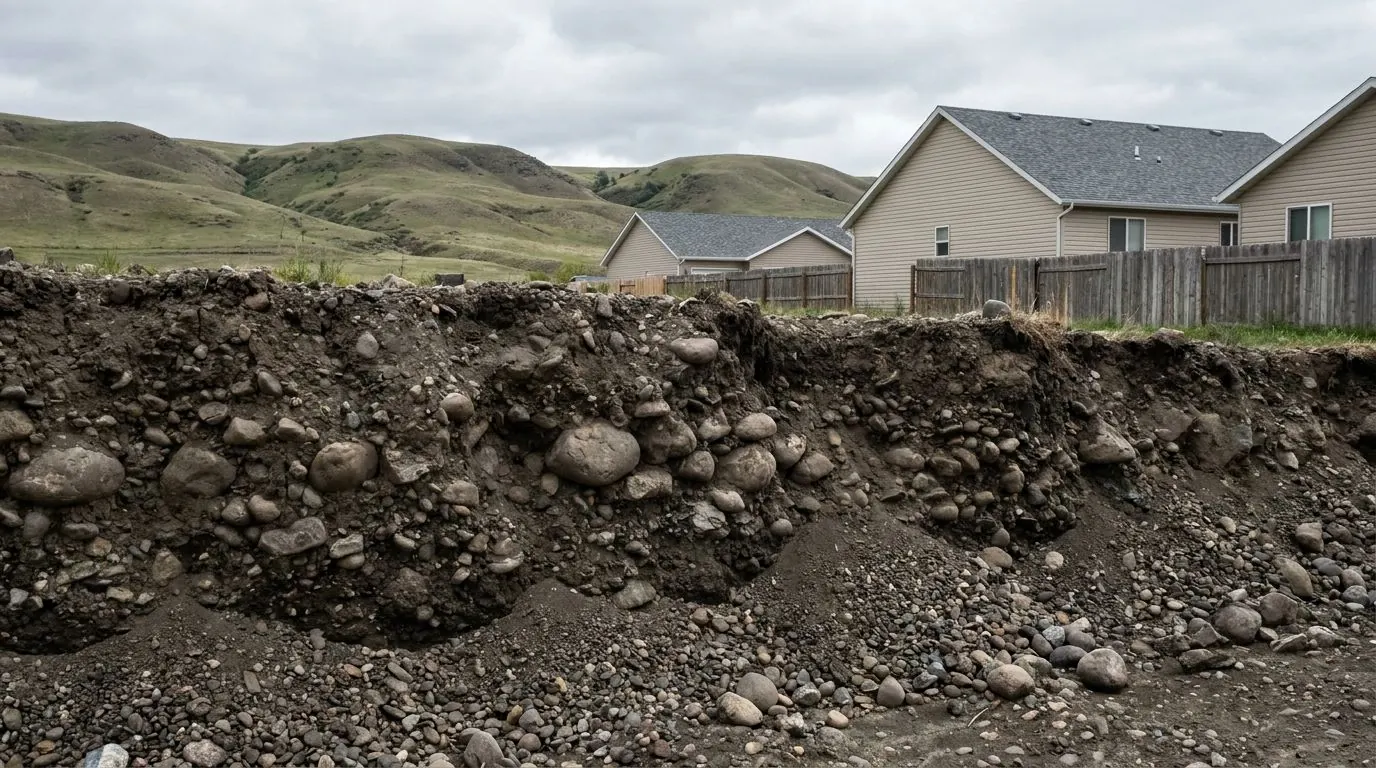
Climbing west toward the foothills, the ground turns to cobbly, dense glacial till with bedrock closer to surface. Expect more installation torque and sturdier pile shafts than on Calgary clay.
Permits and approvals
Building permits in this area come from Town of Cochrane. Within town limits the Town of Cochrane issues permits; beyond them, Rocky View County reviews applications under its own rules. That line counts for more here than in most places we work, since a large share of building with a Cochrane address is really acreage building in the county. A project on a steep slope will reasonably get more engineering scrutiny than the same thing on flat ground. An Alberta P.Eng. at an APEGA permit-holding firm stamps our drawings, and you get a torque record for every pile — in this till, that record also shows where any refusal happened and how it was dealt with. The Town or the County sets fees and timelines.
Typical projects
Decks on sloping lots, walkout foundations, cabins and acreage buildings on stony ground.
Below the surface in Cochrane
In Cochrane, forget what you know about Calgary clay. The town lies in the Bow valley at the foot of Big Hill, and climbing west toward the foothills the soft lake-bed clay is replaced by dense glacial till full of gravel and cobbles, with bedrock getting nearer the surface the further you go. For a structure that is a good thing — this is strong soil that carries load well. The catch is that driving a screw pile into it takes a lot more effort.
That effort is what really matters on a Cochrane job. Tight till calls for more installation torque than an equal load would in Calgary, frequently a stouter shaft as well, and it brings a real chance of refusal — the helix hits a cobble or boulder and cannot advance before reaching design depth. In this soil that is an ordinary event, not a botched install. What we do about it is honest and limited: shift the pile within the allowed tolerance, switch to a different pile setup, or tell you plainly that a screw pile does not belong at that location.
Cochrane also climbs a long way from bottom to top, so no single ground condition covers it. Near the Bow there is river alluvium and water closer to the surface; higher up the slope it is till and cobble. Two homes in the same town can pose entirely different challenges, so before we offer any specifics we want to know how far up the hill the property is.
The projects we see locally
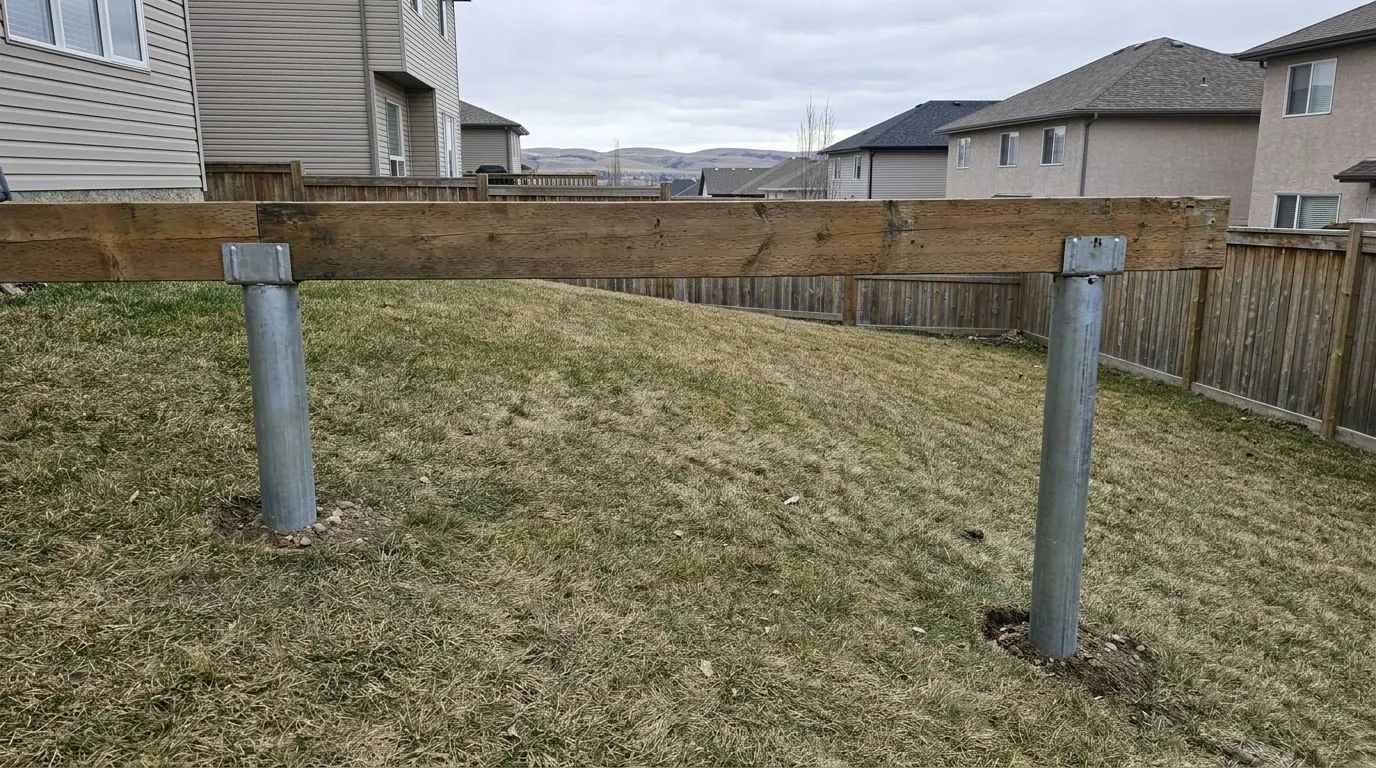
Slopes shape nearly every project. On walkout and side-hill lots the far end of a deck frame can stand two or three storeys above the ground, pile lengths differ a lot within one structure, and there are sideways loads a deck on flat ground never has to handle. Just getting a machine into a steep back yard is a challenge, and the rig small enough to fit is not necessarily able to deliver the torque this till demands — both are checked before a quote goes out.
Heading toward Highway 22 and the acreages, the work shifts to cabins, shops and post-frame buildings on open, exposed land. West of town, wind becomes a design load in itself: a tall, light building on a bare foothills site needs recorded uplift resistance, and helical screw piles take tension directly instead of relying on a heavy block of concrete to keep the structure down.
No screw pile here goes in to a preset depth. It keeps turning until the torque reading shows it has reached the capacity the engineer asked for, which in soil this variable can leave two piles a few metres apart ending at different depths — with neither one wrong. Read more on screw pile depth in Alberta .
Our Cochrane coverage
The map outlines where we install, not a location to drop in on. With Chinook Screw Piles, the rig, the crew and the screw piles all travel to your property. Cochrane and Rocky View County sits inside our normal working radius, so quotes here carry no travel fee.
Town of Cochrane handles permits for projects within the area on this map.
What We Do in Cochrane
Jobs range from a few deck piles up to commercial foundations, with grade beams and underpinning in between. Open any service to read how it applies in Cochrane.
Deck Foundations
Nothing to dig, nothing to cure — start framing that day.
Garage Foundations & Grade Beams
Screw piles and grade beams engineered around Calgary clay.
Home Additions & Sunrooms
Set close to the house while the old foundation stays untouched.
RTM, Modular & Mobile Home Foundations
Engineered screw pile foundations under RTM and modular homes.
Foundation Underpinning
Halt the settlement and carry the house on engineered screw piles.
Foundation Lifting & Levelling
Raise a sunken structure toward the elevation it started at.
Basement Wall Anchors & Tiebacks
Hold a bowing basement wall where it is — and often draw it back.
Slab Jacking & Concrete Lifting
Bring sunken concrete back to level and keep the slab you have.
Commercial Piling
Solar arrays, EV charger bases, sign footings and grade beams.
Industrial & Oilfield Piling
Pipe racks, wellheads, compressor stations and remote sites.
Engineering & Pile Load Testing
Stamped drawings, load tests and torque checked against capacity.
Also Close to Cochrane
Our crews regularly work in these neighbouring communities as well.
Ground and projects around Cochrane
Cochrane Screw Pile FAQ
How deep does a screw pile foundation go in Alberta?
Is a screw pile foundation less expensive than concrete?
What are the drawbacks of screw piles?
Do screw piles go in during the winter?
Is there an extra charge to travel to Cochrane?
Planning a screw pile foundation in Cochrane?
Give us a call or send your project details, and we will get back to you with a price. Chinook Screw Piles is based in Calgary (WCB Alberta covered, Fully liability insured) and works across Cochrane and Rocky View County and the communities around it.