Commercial Piling in Calgary
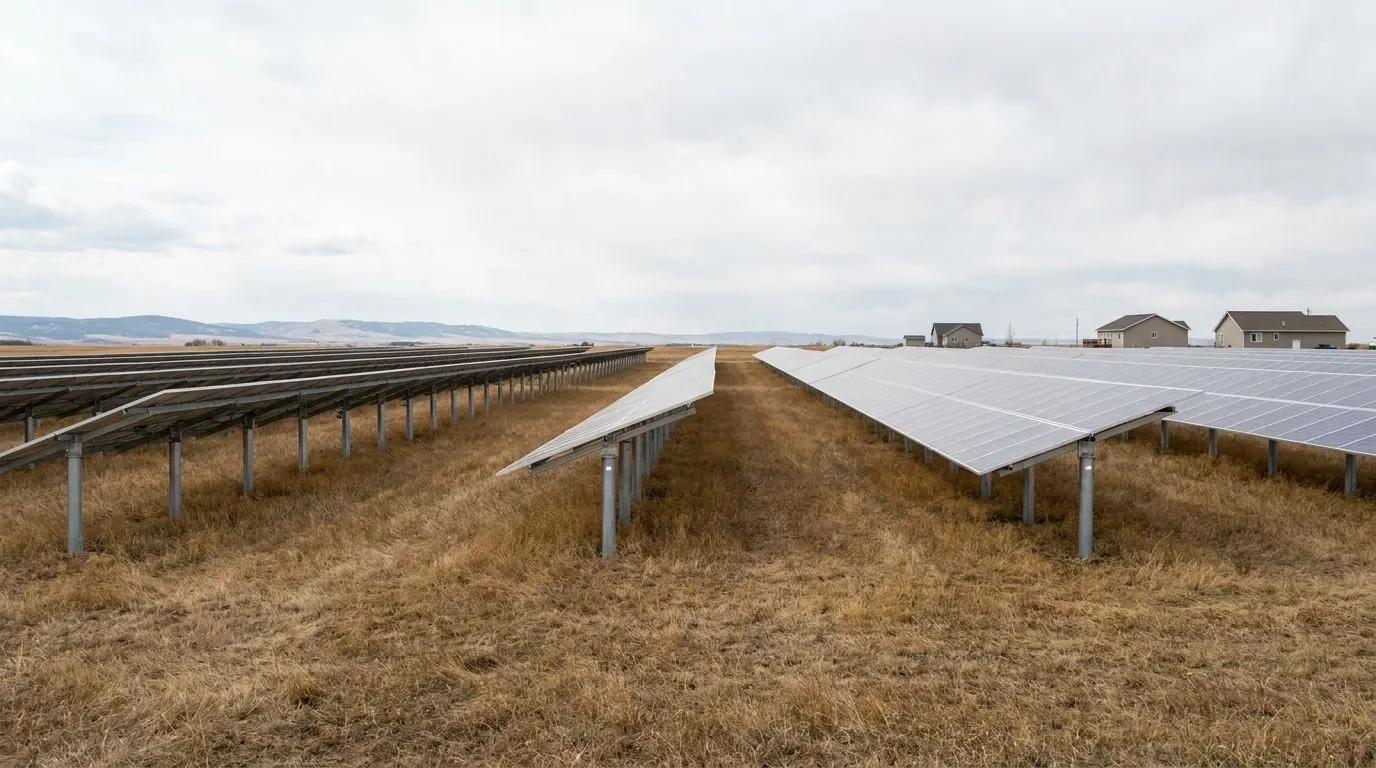
Commercial screw pile work: solar array foundations, grade beams and structural slabs, EV charger and light pole bases, signage and boardwalks.
How Commercial Piling Works, Step by Step
Here is the sequence we run on these jobs, laid out ahead of time so nothing between the first site visit and the last torque reading comes as a surprise.
Quote
Email us drawings or rough measurements — a quote is usually back with you within 48 hours.
Site visit
Before anything is booked, we check the lot for access, likely soil conditions and the pile layout.
Engineering
If your permit calls for them, we supply load calculations and drawings under a professional stamp.
Install
Each screw pile is turned down until it reaches its engineered torque. A typical house job is finished in roughly half a working day.
Torque log
At handover you get the installation torque for every pile, its verified capacity and the as-built records.
The real work behind commercial piling
The typical commercial screw pile job is less a foundation than a pattern. A solar field is row after row of matching posts; a parking lot repeats one light standard base the length of every aisle; a pylon sign puts a large overturning moment onto a small pile group. Boardwalks, EV charger pedestals and small pre-engineered buildings fall into the same category. The engineering gets solved one time and then repeated hundreds of times, which means layout accuracy, installation pace and documentation matter far more than the individual pile detail.
The customer is usually a GC’s site superintendent or a developer’s PM, and what they are really buying is a schedule date and a submittal, not steel. The electrician is waiting on bases to run conduit to, a racking shipment is already booked, and closeout holds up on whichever trade submits as-builts last. Showing up in the promised window and turning torque records around within the week is worth more on these jobs than shaving the price per pile.
Helical screw piles win the slot for a single reason: nothing has to cure. Racking, light poles and pedestals can go on the same day the piles are installed, removing a step from the critical path. No excavated spoil gets hauled across a finished lot, and installation keeps going through a Calgary winter.
On site, from start to finish
Layout happens before a single pile turns, because repeated-array jobs are decided there. The grid is staked from the survey control shown on the drawings, never measured from a curb, and position and plumb tolerances are stricter than anything residential work requires — prefab racking and bolted base plates only allow as much adjustment as their slots provide, and a pile outside that range gets pulled and put in again. Locates carry more weight too: retrofit EV and lighting installs go through existing asphalt above lighting circuits, irrigation and old conduit, and a good share of that is privately owned, so the public one-call service never marks it.
The first row is a check on the design assumptions — if torque is going to surprise anyone, it should do it early in the first row, not four hundred piles later. From there it becomes production work, scheduled around the other trades. Torque is logged for each pile and checked against the pile schedule every shift, so any shortfall comes to light that day and is sorted out with the engineer before the crew leaves site. Inspection seldom comes from just one direction: a building inspector for the structure, an electrical inspector for charging or lighting, and often the owner’s engineer doing field review, each expecting the records in their own format.
What shapes the design
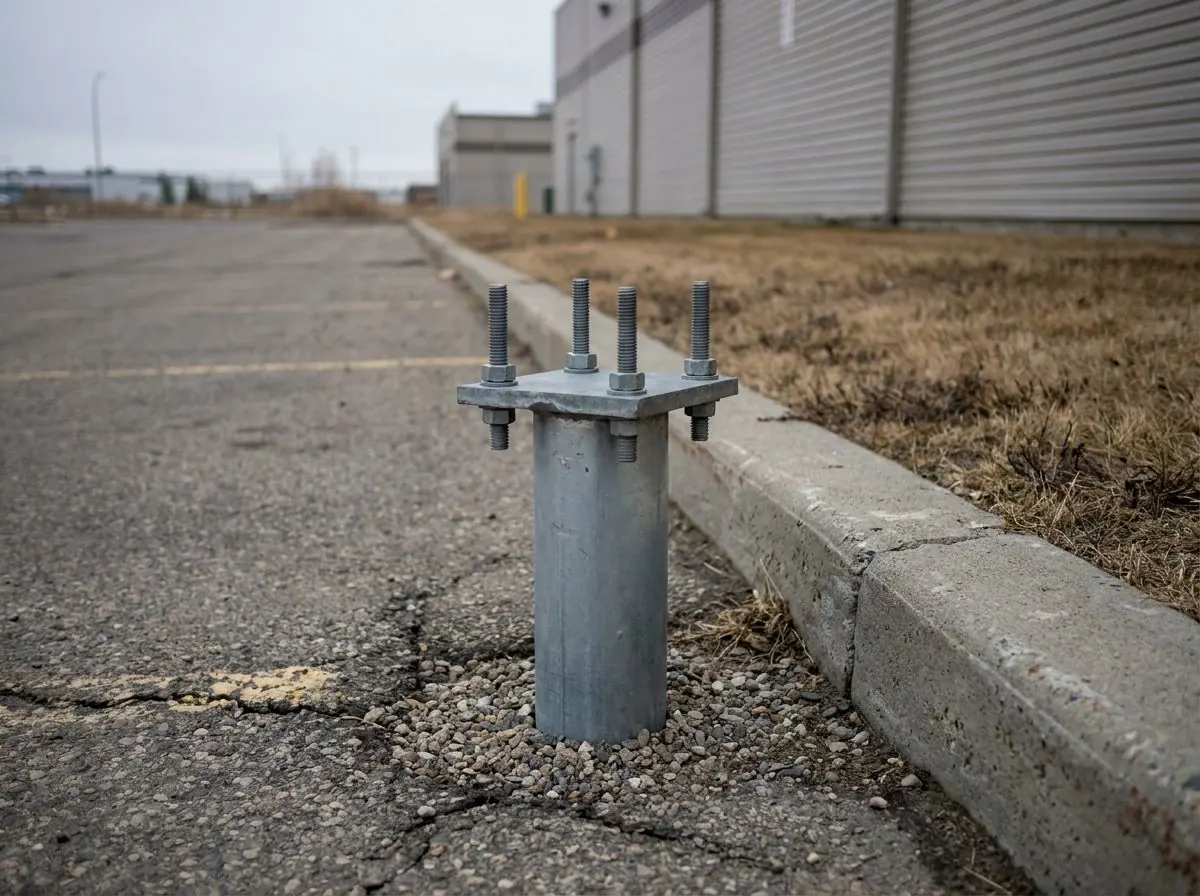
The load case that governs is frequently not the one you would guess. Solar racking is controlled by uplift and lateral wind load on tilted panels, with snow pushing the opposite way, so the helix is sized for tension as much as for compression. Signs and light standards are about resisting overturning, and the top connection — welded plate, bolt circle or embedded anchor cage — is just as much part of the spec as the helix below. Boardwalk piles carry little weight but have to deal with frost gripping the shaft.
Repetition also shifts how the design should be approached. A single pile configuration used across the entire array generally beats tailoring every position, right up until the array runs over a change in soil — at which point two configurations with a mapped boundary outperform one compromise. Access covers the rest: the machine that fits between rows limits torque, torque limits capacity per pile, and that sets spacing and pile count.
Commercial Piling Near You
Soil, slope and the office that issues your permit all change from one community to the next. Choose yours below to see how commercial piling plays out locally in Calgary and the towns around it.
City of Calgary
Your quote within 48 hours
City of Airdrie
Your quote within 48 hours
Rocky View County
Your quote within 48 hours
Foothills County
Your quote within 48 hours
City of Chestermere
Your quote within 48 hours
Wheatland County
Your quote within 48 hours
Foothills County
Your quote within 48 hours
Rocky View County
Your quote within 48 hours
Commercial Piling: photos from the field
Common Questions on Commercial Piling
How deep does a screw pile foundation go in Alberta?
Is a screw pile foundation less expensive than concrete?
What are the drawbacks of screw piles?
Do screw piles go in during the winter?
Planning Commercial Piling?
Tell us about the project and we will price it at no charge. Chinook Screw Piles puts engineered helical screw piles in the ground throughout Calgary and its neighbouring towns — phone or send the details, whichever is easier.