Screw Piles in Calgary, AB
Screw piles Calgary homeowners rely on, installed in NW, NE, SW and SE. We know the local clay, help with City of Calgary permits and charge no travel fee.
Throughout Calgary, Chinook Screw Piles sets helical screw piles under new decks, garage grade beams and home additions, and underpins older footings once they begin to shift. Every pile is checked against its torque target, permits get stamped drawings when they require them, travel costs you nothing, and quotes land within 48 hours.
At a Glance
- Municipality
- City of Calgary
- Residents
- 1,306,784
- Postal Prefixes
- T1Y, T2A, T2C, T2E, T2H, T2J, T2N, T3A, T3H, T3K
- Quote Timing
- Your quote within 48 hours
Screw Pile Foundations for Calgary Soil
What the soil is like
North and east Calgary sit on glaciolacustrine clay that swells and shrinks markedly. Inner-city lots often hide old, uneven fill, and the Bow and Elbow river valleys carry perched water. Frost penetration varies by site and is confirmed in design.
Permits and approvals
Building permits in this area come from City of Calgary. Permits are issued by the City of Calgary. Most projects need a structural permit, and some — garden suites and additions that alter the building footprint are the usual examples — will first need a development permit under the Land Use Bylaw. Lots on or close to a river escarpment get a closer look than a level suburban property, so plan on geotechnical input there. When engineering is called for, an Alberta P.Eng. at an APEGA permit-holding firm stamps our drawings, and you receive the torque log and as-built record for every pile. The City, not us, sets the fees and how long review takes.
Typical projects
Screw pile foundations for garden suites, additions, decks and detached garages on grade beams, including inner-city lots with lane-only access.
Below the surface in Calgary
People often describe “Calgary soil” as if it were one thing, and pricing a job on that assumption is a mistake we run into constantly. Across the north and east the city rests on glaciolacustrine clay that swells and shrinks a great deal — it can heave one corner of a deck during a wet spring and let it settle back by late summer. Close to the Bow and the Elbow it is a different story: river-terrace gravels, sands and silts, where the depth to competent bearing can shift within the width of a back yard.
Communities down in the river valleys also deal with perched water, held above the regional water table. Digging and forming a concrete footing in that is a wet, frustrating job. A screw pile is barely bothered by it, and that is a big part of the reason engineers call for piles on those terraces.
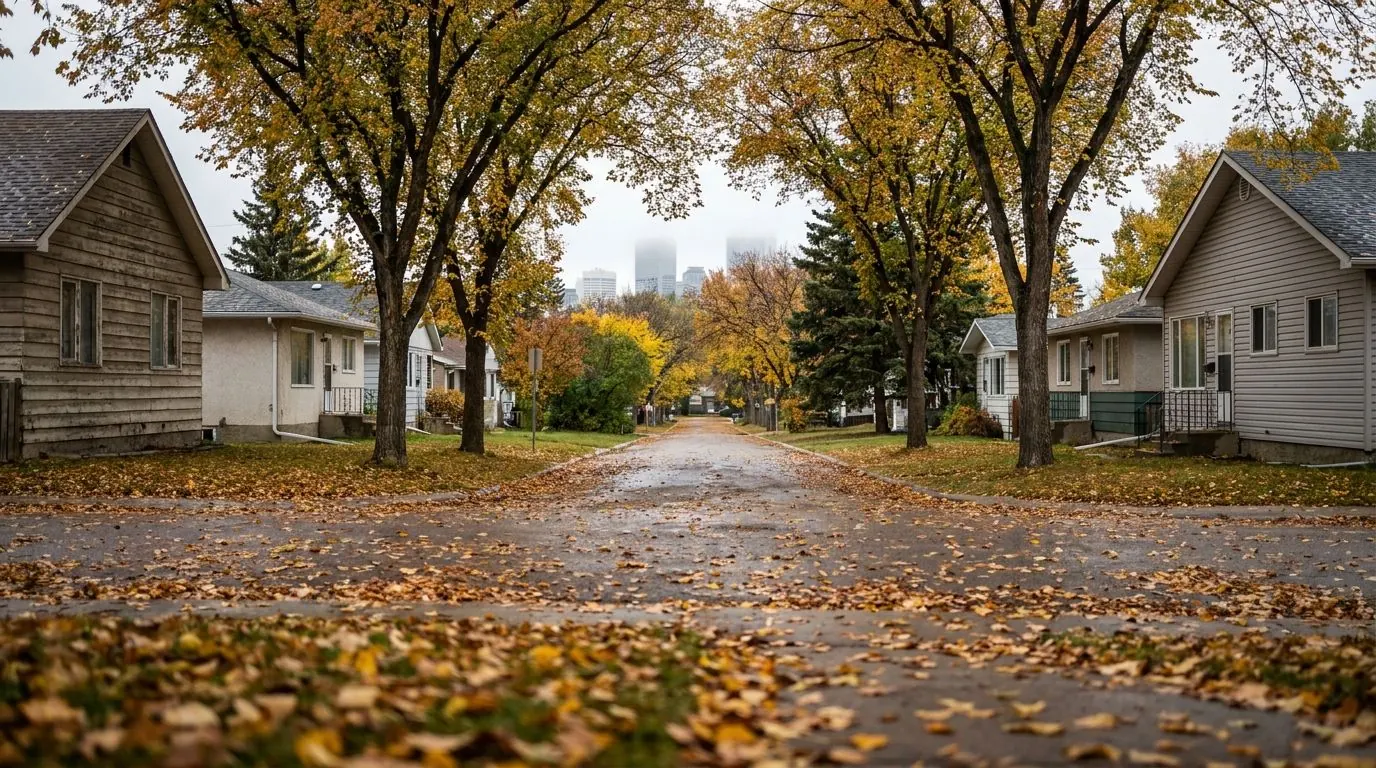
In older inner-city districts, what lies under the lawn is more history than geology. A lot in Killarney, Renfrew or Mount Pleasant may have seen two or three houses over the decades, and the yard can conceal old demolition debris, coal ash, a backfilled cistern or the foundation of a house torn down generations ago. You cannot see any of it from above. That is why each helical pile is signed off on the torque we measure, not on a depth written in advance — piles a few metres apart on the same lot can legitimately stop at quite different depths.
The projects we see locally
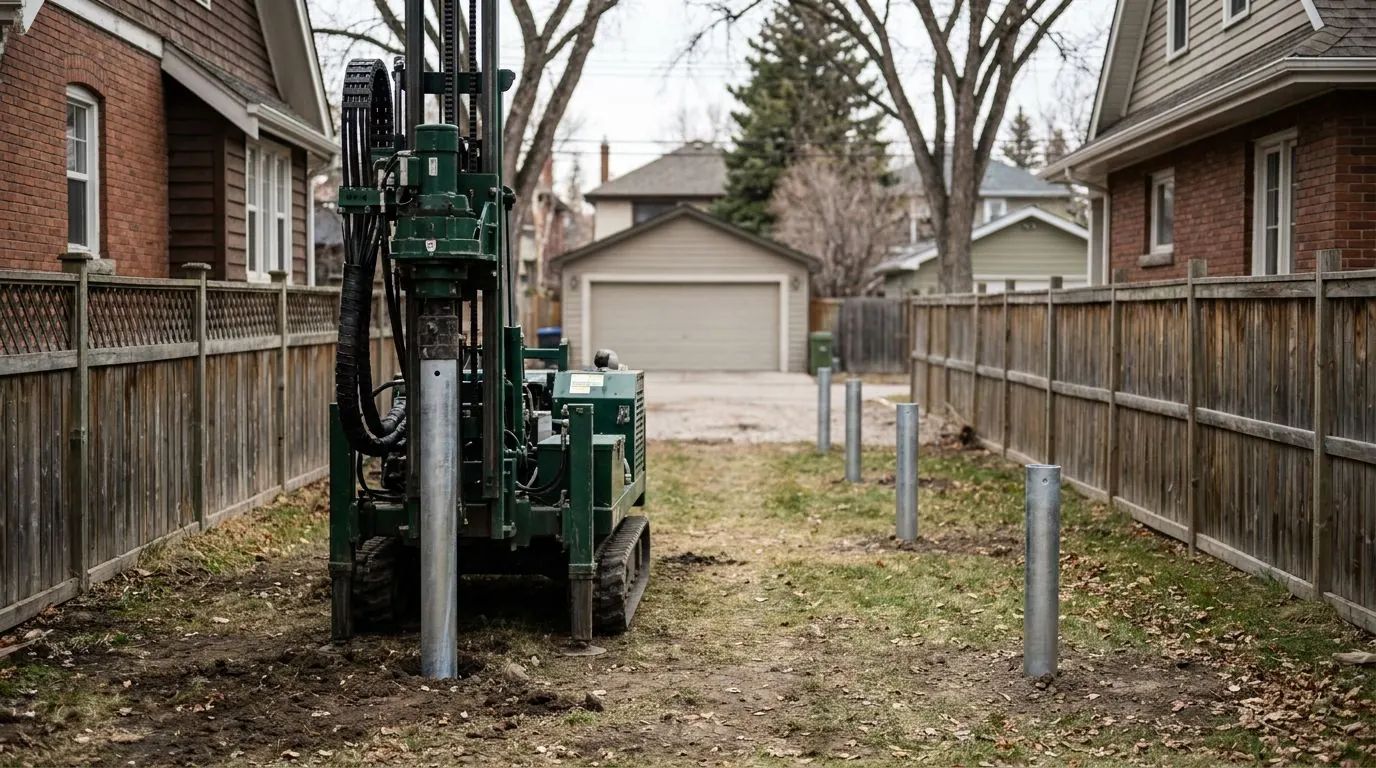
Much of what we install in Calgary supports new construction on lots that already have a house: laneway homes and garden suites, additions off the back, detached garages sitting on grade beams carried by piles, and replacement decks. The soil is rarely what makes these jobs hard. Getting in is. Picture a 7.5-metre inner-city lot with the house along one side, a fence along the other and the rear lane as the only entry — no concrete truck or full-size excavator will fit, and the mature boulevard trees mean the approach cannot be widened either.
Our screw pile equipment travels in by the lane, leaves next to no spoil, needs no forms and no curing time, and the street is clear for the neighbours by evening. Out in the newer suburbs it is another kind of job altogether: easy access, consistent clay, and routine decks, hot tubs and garages on soil that shifts with the seasons.
No screw pile here goes in to a preset depth. It keeps turning until the torque reading shows it has reached the capacity the engineer asked for, which in soil this variable can leave two piles a few metres apart ending at different depths — with neither one wrong. Read more on screw pile depth in Alberta .
Our Calgary coverage
The map outlines where we install, not a location to drop in on. With Chinook Screw Piles, the rig, the crew and the screw piles all travel to your property. Calgary sits inside our normal working radius, so quotes here carry no travel fee.
City of Calgary handles permits for projects within the area on this map.
What We Do in Calgary
Jobs range from a few deck piles up to commercial foundations, with grade beams and underpinning in between. Open any service to read how it applies in Calgary.
Deck Foundations
Nothing to dig, nothing to cure — start framing that day.
Garage Foundations & Grade Beams
Screw piles and grade beams engineered around Calgary clay.
Home Additions & Sunrooms
Set close to the house while the old foundation stays untouched.
RTM, Modular & Mobile Home Foundations
Engineered screw pile foundations under RTM and modular homes.
Foundation Underpinning
Halt the settlement and carry the house on engineered screw piles.
Foundation Lifting & Levelling
Raise a sunken structure toward the elevation it started at.
Basement Wall Anchors & Tiebacks
Hold a bowing basement wall where it is — and often draw it back.
Slab Jacking & Concrete Lifting
Bring sunken concrete back to level and keep the slab you have.
Commercial Piling
Solar arrays, EV charger bases, sign footings and grade beams.
Industrial & Oilfield Piling
Pipe racks, wellheads, compressor stations and remote sites.
Engineering & Pile Load Testing
Stamped drawings, load tests and torque checked against capacity.
Also Close to Calgary
Our crews regularly work in these neighbouring communities as well.
Ground and projects around Calgary
Calgary Screw Pile FAQ
How deep does a screw pile foundation go in Alberta?
Is a screw pile foundation less expensive than concrete?
What are the drawbacks of screw piles?
Do screw piles go in during the winter?
Is there an extra charge to travel to Calgary?
Planning a screw pile foundation in Calgary?
Give us a call or send your project details, and we will get back to you with a price. Chinook Screw Piles is based in Calgary (WCB Alberta covered, Fully liability insured) and works across Calgary and the communities around it.