Screw Piles in Chestermere, AB
Chestermere screw pile foundations engineered to reach past heavy clay and the high water table by the lake. No travel charge within Chestermere.
Throughout Chestermere, Chinook Screw Piles sets helical screw piles under new decks, garage grade beams and home additions, and underpins older footings once they begin to shift. Every pile is checked against its torque target, permits get stamped drawings when they require them, travel costs you nothing, and quotes land within 48 hours.
At a Glance
- Municipality
- City of Chestermere
- Residents
- 22,163
- Postal Prefixes
- T1X
- Quote Timing
- Your quote within 48 hours
Screw Pile Foundations for Chestermere Soil
What the soil is like
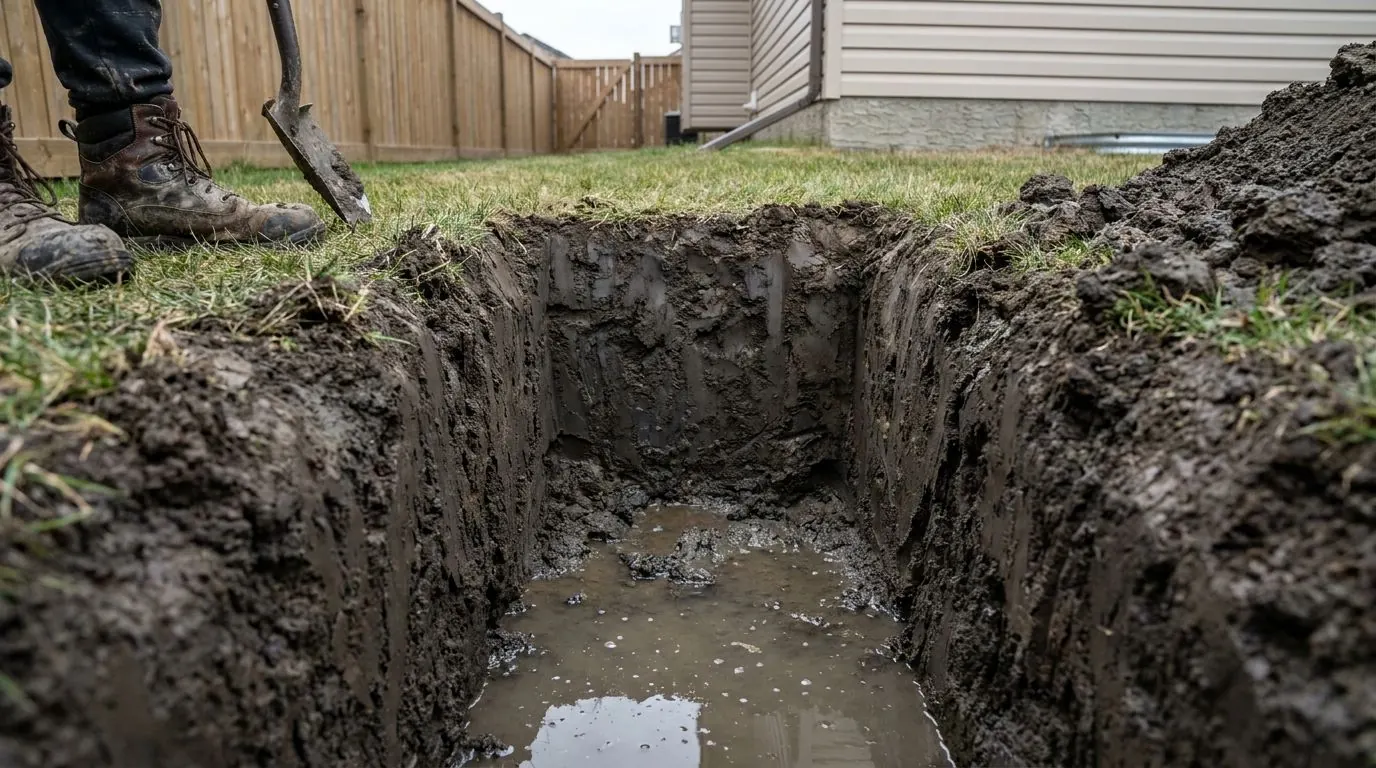
Heavy clay, with groundwater sitting high near the lake. Shallow footings move readily on this ground, while piles transfer load beneath the layer that shifts.
Permits and approvals
Building permits in this area come from City of Chestermere. Chestermere became a city in 2015, and the City of Chestermere is who issues its permits. Rocky View County, which encircles the city, governs the neighbouring addresses under separate rules, so confirm which side of the line you are on before any design work. What is unique here is the Western Irrigation District. Because the lake and canals belong to the WID, work at the water, over it, or near a canal right-of-way may need the District’s involvement on top of the City’s — check with both before settling a shoreline plan. When engineering is needed, an Alberta P.Eng. at an APEGA permit-holding firm stamps the drawings, and you get a torque record for each pile at handover. The City and the WID set the requirements, fees and timelines.
Typical projects
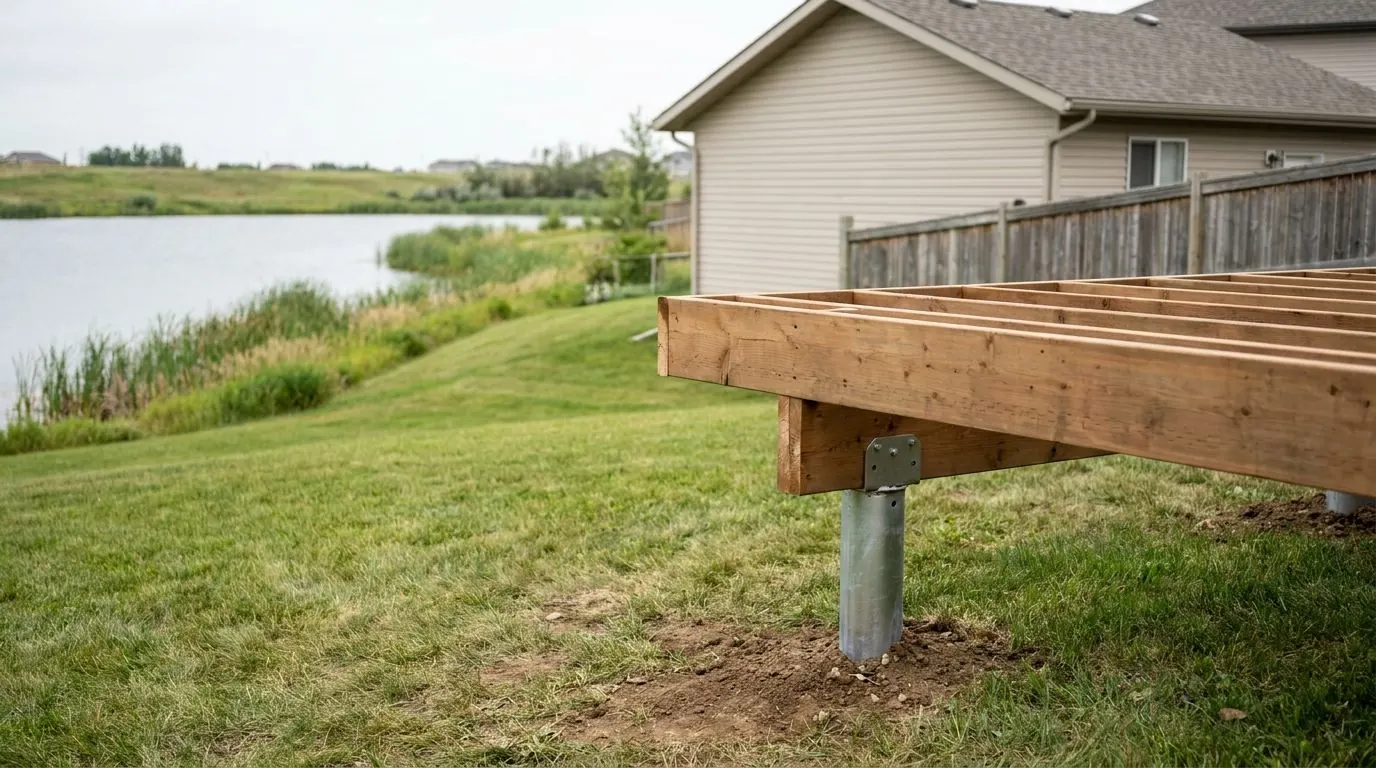
Decks by the lake, garages, and stabilising foundations disturbed by clay movement.
Below the surface in Chestermere
The lake that gives Chestermere its name is man-made: a reservoir within the Western Irrigation District canal network, held back by a dam and supplied from the Bow. Keep that in mind whenever you think about groundwater in this city. The soil around it is the same heavy clay found across the plain east of Calgary, but along the shore and beside the canals the water table is high, and it rises and falls with how the irrigation system is run rather than just with the weather — the WID lowers the lake every fall before freeze-up.
Clay that stays saturated loses strength, and close to the lake that softness can extend well past the level where an ordinary footing would bear. The answer is to take the screw pile through the soft layer and into firmer ground below, confirming it with installation torque — on this soil, picking a depth ahead of time is a guess. The practical upside is that water in the ground does not get in a helical pile’s way the way it floods an open hole. Excavating for a footing beside the lake means pumping and fighting slumping walls; turning a pile through that same soil does not.
Move back from the shoreline and the newer subdivisions are on typical high-plasticity prairie clay, swelling and shrinking much as it does in northeast Calgary or Airdrie. In effect Chestermere is two separate foundation markets — a wet band along the water and an ordinary clay-plain suburb inland — and each calls for its own design.
The projects we see locally
Waterfront properties generate jobs that do not come up elsewhere in our service area: decks that step down the bank toward the lake, gazebos at the shore, supports for boat lifts and gangways, and stairs set on soft ground where pouring concrete would be awkward and likely to shift. All of it stands in wet, weak soil and gets pushed sideways and pulled upward by wind, ice and everyday use, so a screw pile foundation here has to be designed for tension and corrosion as well as bearing.
Inland it is another job altogether: back decks, hot tub bases, detached garages, home additions and stabilising foundations moved by the clay, on newer houses with plenty of room for equipment. The same municipality and the same permit counter, but a completely different engineering question.
No screw pile here goes in to a preset depth. It keeps turning until the torque reading shows it has reached the capacity the engineer asked for, which in soil this variable can leave two piles a few metres apart ending at different depths — with neither one wrong. Read more on screw pile depth in Alberta .
Our Chestermere coverage
The map outlines where we install, not a location to drop in on. With Chinook Screw Piles, the rig, the crew and the screw piles all travel to your property. Chestermere sits inside our normal working radius, so quotes here carry no travel fee.
City of Chestermere handles permits for projects within the area on this map.
What We Do in Chestermere
Jobs range from a few deck piles up to commercial foundations, with grade beams and underpinning in between. Open any service to read how it applies in Chestermere.
Deck Foundations
Nothing to dig, nothing to cure — start framing that day.
Garage Foundations & Grade Beams
Screw piles and grade beams engineered around Calgary clay.
Home Additions & Sunrooms
Set close to the house while the old foundation stays untouched.
RTM, Modular & Mobile Home Foundations
Engineered screw pile foundations under RTM and modular homes.
Foundation Underpinning
Halt the settlement and carry the house on engineered screw piles.
Foundation Lifting & Levelling
Raise a sunken structure toward the elevation it started at.
Basement Wall Anchors & Tiebacks
Hold a bowing basement wall where it is — and often draw it back.
Slab Jacking & Concrete Lifting
Bring sunken concrete back to level and keep the slab you have.
Commercial Piling
Solar arrays, EV charger bases, sign footings and grade beams.
Industrial & Oilfield Piling
Pipe racks, wellheads, compressor stations and remote sites.
Engineering & Pile Load Testing
Stamped drawings, load tests and torque checked against capacity.
Also Close to Chestermere
Our crews regularly work in these neighbouring communities as well.
Ground and projects around Chestermere
Chestermere Screw Pile FAQ
How deep does a screw pile foundation go in Alberta?
Is a screw pile foundation less expensive than concrete?
What are the drawbacks of screw piles?
Do screw piles go in during the winter?
Is there an extra charge to travel to Chestermere?
Planning a screw pile foundation in Chestermere?
Give us a call or send your project details, and we will get back to you with a price. Chinook Screw Piles is based in Calgary (WCB Alberta covered, Fully liability insured) and works across Chestermere and the communities around it.