The Real Downsides of Screw Piles
Screw piles are our core business, so read this with a healthy dose of doubt — and then consider how few screw pile companies are willing to publish a page like it.
Here are the five genuine drawbacks.
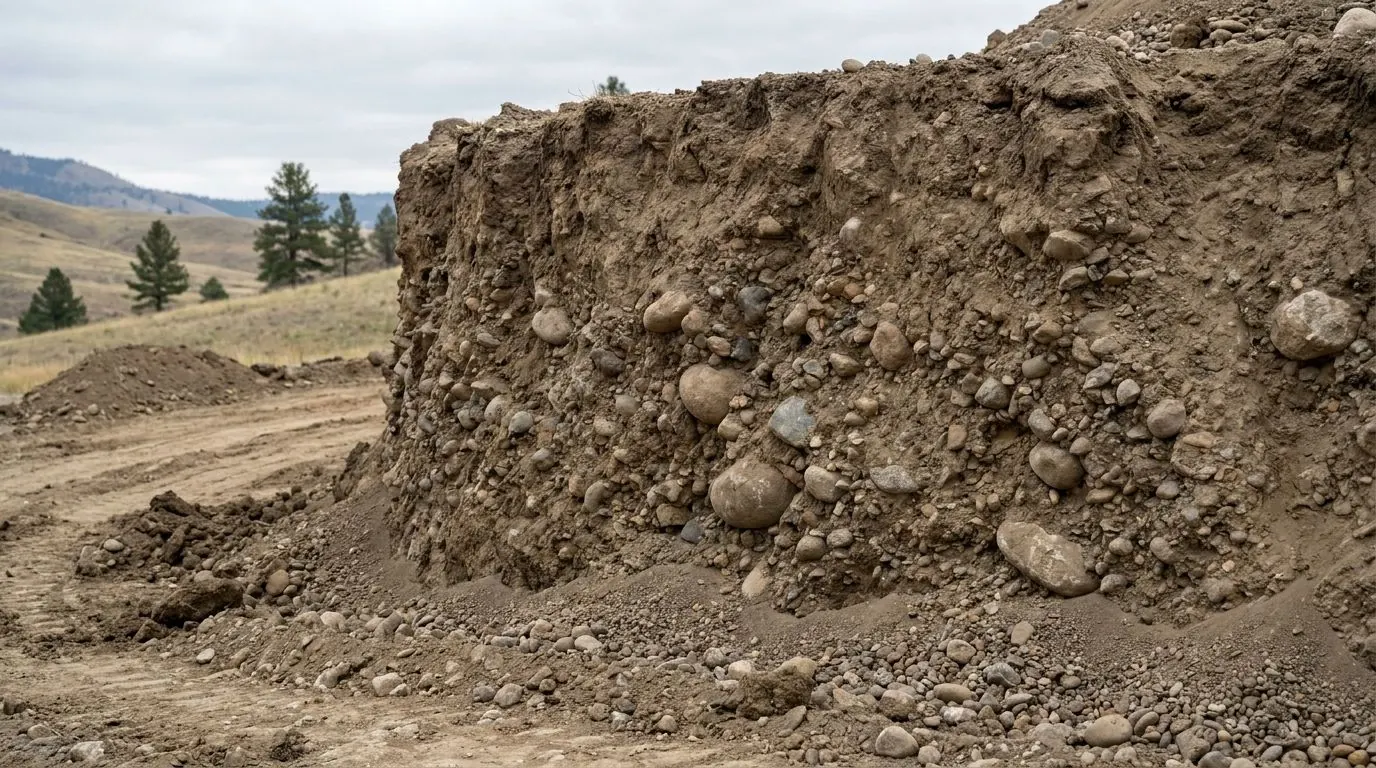
1. Cobbles, till and shallow bedrock can halt a pile
Helical piles move downward by slicing through soil. Big cobbles, dense glacial till or bedrock near the surface can halt one before it gets as deep as it needs to.
How much that matters depends on location. Heading west from Calgary toward Cochrane, the soil becomes dense cobbly till as the land climbs into the foothills. Screw piles still work there, with heavier shafts and higher torque, but installation takes longer and costs more than on a clean clay lot inside the city.
When a pile meets refusal at a depth too shallow for its load, the honest fixes are resizing the pile, shifting its location, or another type of foundation — never “that’ll do.”
2. Without engineering, they are just steel
Without verification, a screw pile is just a post stuck in the dirt.
What makes helical piles valuable is that installation torque correlates with bearing capacity — yet that’s only meaningful when someone set a required capacity, monitored the torque, and kept a record. An installer who drives to a set depth and logs nothing has sold you steel and an educated guess.
If your quote says nothing about torque logs or engineered capacity, raise the question before signing.
3. Corrosion needs planning over the long term
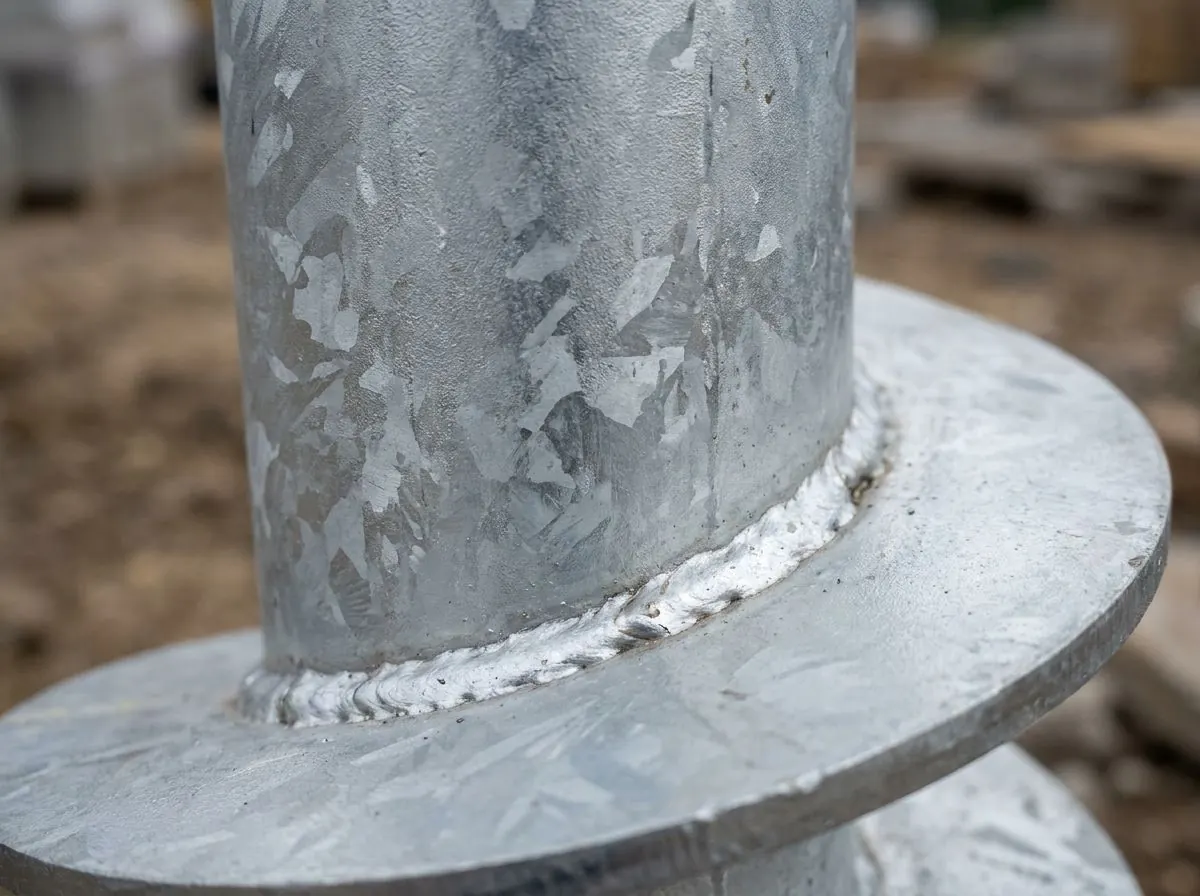
Buried steel rusts. Galvanizing slows the process a great deal, and well-designed systems include a sacrificial thickness so the pile keeps carrying its load through its design life.
Aggressive soils are another story — high salinity, low resistivity, some industrial ground — where corrosion speeds up and the design must allow for it rather than ignore it. On typical Calgary residential lots it isn’t a practical issue. On certain industrial sites it very much is.
4. Each pile costs more than a concrete one
Pile for pile, a helical steel shaft is pricier than a concrete-filled tube. Screw piles come out ahead overall thanks to savings on labour, schedule and spoil removal — not on materials.
For very high pile counts on open sites that trucks can reach easily, that edge shrinks and can vanish. Someone claiming screw piles always cost less is pitching, not advising.
5. Some jobs simply don’t suit them
Screw piles support point loads. A structure that needs continuous bearing isn’t well served by a grid of piles. A freestanding ground-level deck may need no engineered foundation whatsoever. A small shed frequently does fine on skids or a gravel pad.
We’d sooner point that out than book the work.
How long do screw piles last?
Galvanized piles that are properly specified for ordinary soils are designed to serve for decades, and manufacturers often quote design lives of 75–100 years for their systems.
Be cautious with any single figure. Service life hinges on steel thickness, the coating, and how corrosive your soil really is — it comes out of the design, it isn’t a feature on the box. Ask which design life the spec assumes, and what soil information that assumption was based on.
The honest summary
Screw piles shine on tight-access sites, in winter, on fast schedules, on reactive clay, and wherever verified capacity matters. They struggle with shallow bedrock, carry a higher unit price than concrete, and are worth nothing without engineering behind them.
That’s the full picture. If it steers your project away from screw piles, we’ll tell you so.
Request a quote, or read our honest cost comparison with concrete.
Thinking about screw piles for your project?
Questions after reading this, or ready for a price? Get in touch — we install screw pile foundations in Calgary and the towns around it.