Does Home Depot Sell Screw Piles? (And Are They Enough for Calgary?)
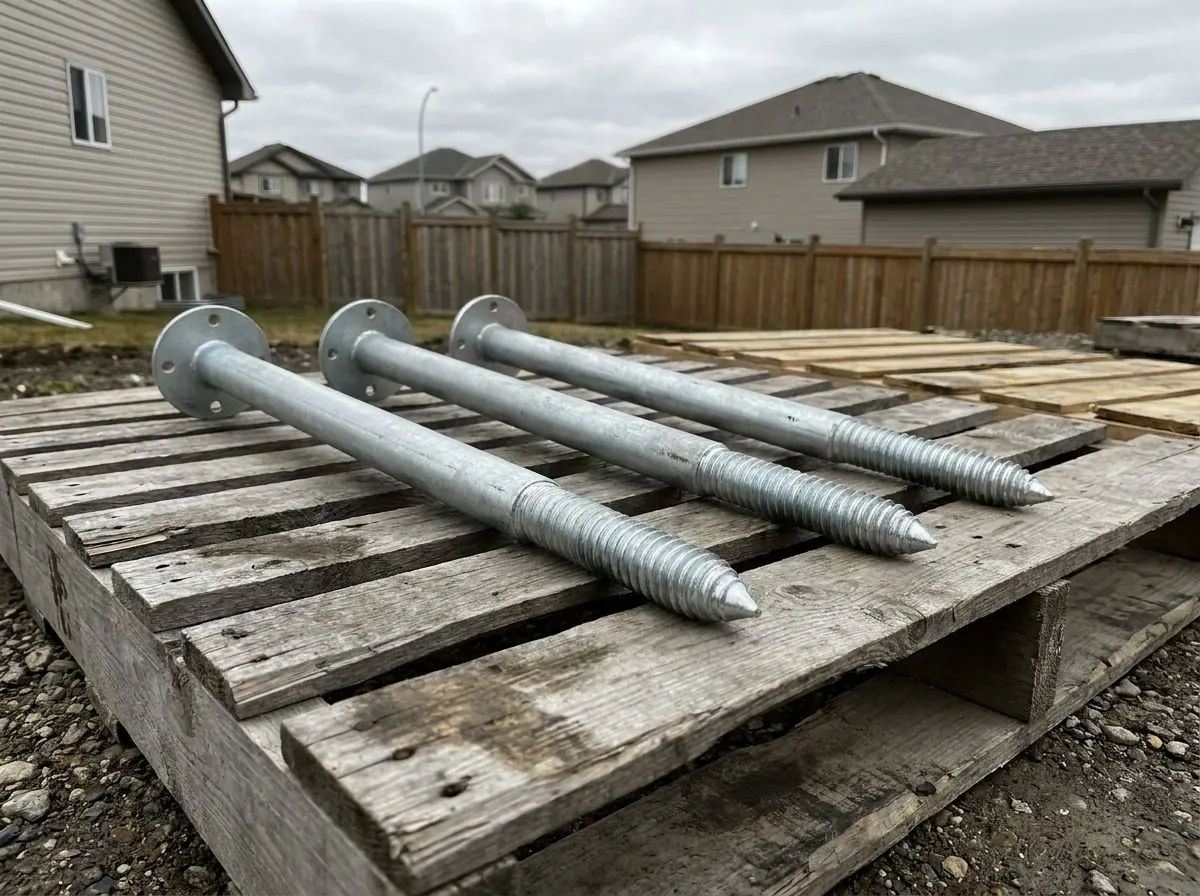
They do. Home Depot Canada stocks Pylex adjustable foundation screws, including a 50-inch model sold right off the shelf.
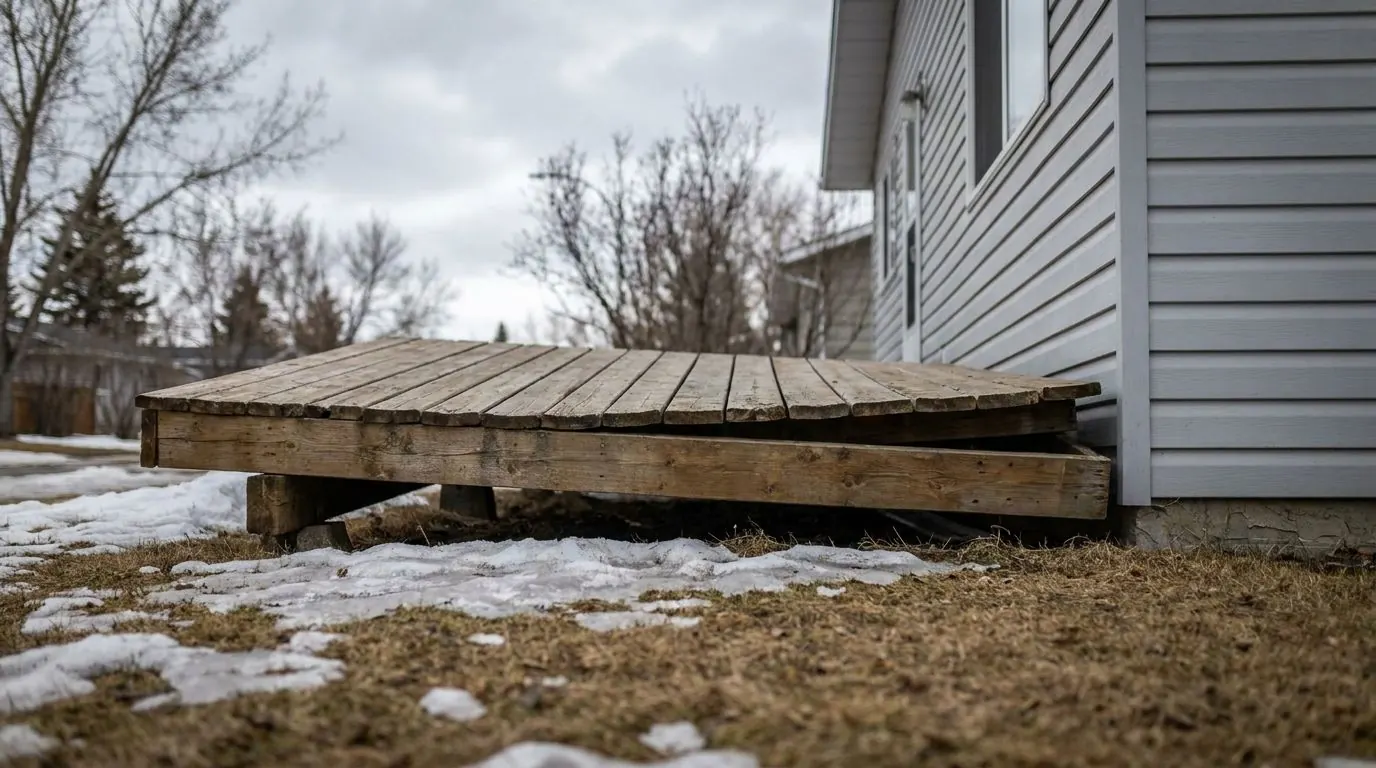
It’s a legitimate product with legitimate uses. It’s also behind one of the most common foundation problems on Calgary decks and sheds — and the cause comes down to a single measurement.
The number that matters: 50 inches
A standard Pylex screw measures 50 inches, which works out to roughly 1.27 metres.
Around Calgary, frost is commonly cited as reaching somewhere in the range of 1.2 to 1.8 metres in an ordinary winter; your site and your engineer set the real design figure.
Put those side by side. Installed flush with grade, a 50-inch screw bottoms out at the shallow edge of that range — and in a harder winter or on an exposed lot, it can end up above the frost line. Anything bearing above frost sits in soil that heaves as it freezes and settles back as it thaws.
That is the core issue. The screw isn’t poorly made; its length simply suits a gentler climate better than it suits ours.
Pylex offers extensions, and installed correctly they do help. Once you add them, though, you’re turning an ever-longer steel column into Alberta clay by hand — which leads to the next problem.
Where they genuinely do the job
Give the product its due. Hand-turned foundation screws make good sense for:
- Garden sheds and other small outbuildings
- Freestanding ground-level decks and landings
- Steps and small landings
- Walkways and lightweight structures in general
On jobs like these the loads are light, a bit of movement does little harm, and skipping concrete genuinely saves time and money.
Where they hit their limits
Frost depth, covered above — the biggest factor in Calgary.
Rocks and roots. A screw turned by hand halts the instant it meets a cobble, and the ground north and west of the city has plenty. No amount of leaning on a 2×4 will torque a screw past a rock.
Load. They’re built for light duty. They aren’t meant for a multi-storey addition, a garage sitting on a grade beam, or anything supporting part of your home.
No verification. This one is easy to overlook. Turning a screw by hand gives no torque reading, so the capacity you ended up with is unknown. What you have is a screw at some depth; its load-carrying ability is anybody’s guess.
Signs you need an engineered screw pile
Skip the hardware-store screw if any of the following apply:
- The structure connects to your house
- A permit is needed and the authority wants engineered drawings
- The deck sits high enough that a failure would have consequences
- Your lot is on till or cobbles, or out west toward Cochrane
- An inspector or a future buyer will want proof of capacity
The honest advice
For a shed, or a small 8×8 deck at ground level, pick up the screws, find a how-to video, and spend a pleasant Saturday on it. We mean that — it’s a sensible DIY project and you won’t need us.
For a deck ledgered to the house, anything much above knee height, or a job where the permit office wants drawings, a 50-inch screw won’t do it, and hand-turning extensions onto it won’t change that.
Why write this instead of steering everyone away from DIY? Because the jobs where it works aren’t the ones we’d be doing anyway — and the jobs where it doesn’t are far cheaper to build right with an engineered screw pile foundation from day one than to dig up and redo after a Calgary winter.
Unsure where your project lands? Send over the dimensions and you’ll get a straight answer — request a quote, or read how deep screw piles go in Alberta.
Thinking about screw piles for your project?
Questions after reading this, or ready for a price? Get in touch — we install screw pile foundations in Calgary and the towns around it.