Can You Install Screw Piles Yourself? It Depends
In some cases, yes. Whether DIY makes sense has less to do with how handy you are and more to do with what the screw piles will support — and whether somebody will later ask you to prove they can support it.
The short version
It’s likely fine for a garden shed, a low deck standing on its own away from the house, a run of steps or a lightweight backyard structure, provided the soil isn’t difficult.
It’s likely a mistake when the build connects to your house, requires a permit, carries a heavy load, or goes into till and cobbly ground.
How hand installation actually works
With light-duty foundation screws, the steps really are straightforward:
- Lay out the positions. Take the pile locations from your beam and joist drawing. Where piles go is a structural decision — pull it from the design rather than guessing by eye.
- Prepare the spot. Remove the sod, then press a pry bar into the soil to form a small pilot so the tip grabs exactly where you intend.
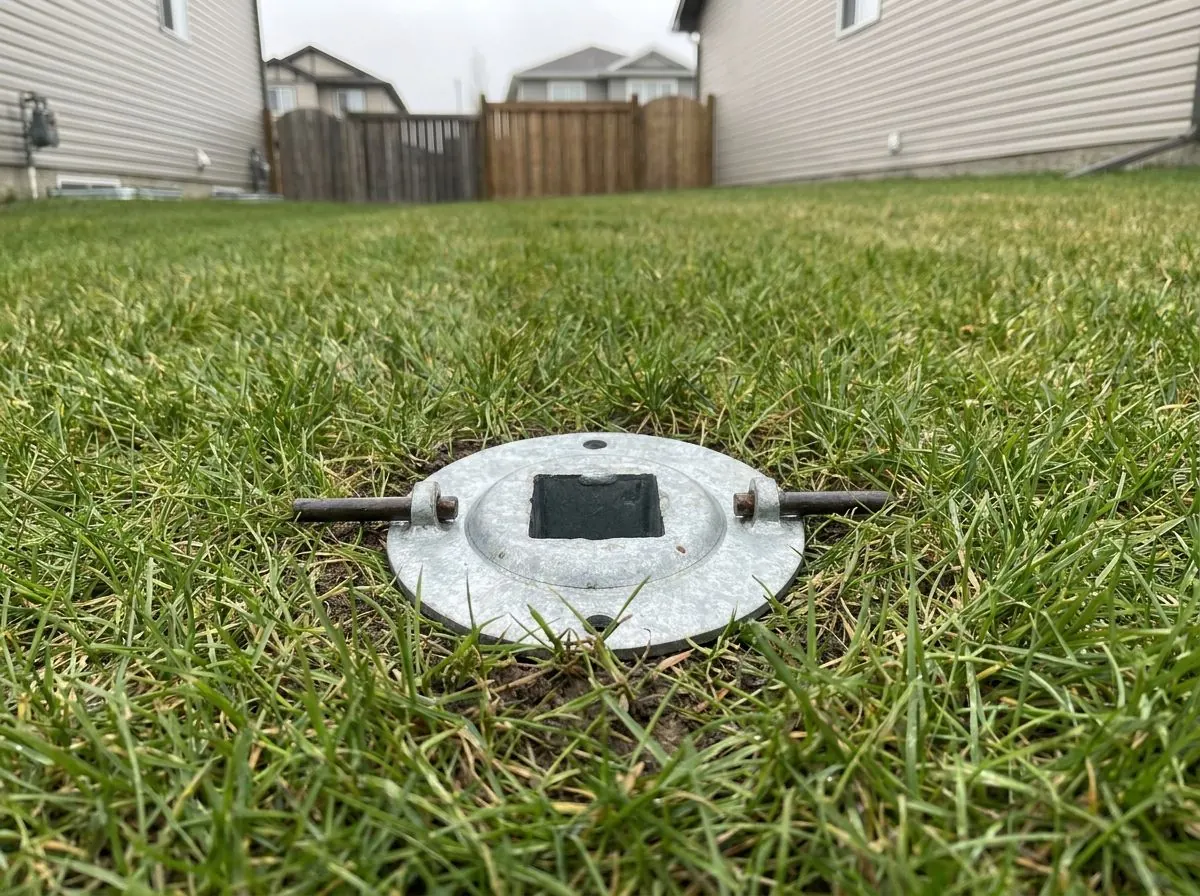
- Turn it in. Slide a 2×4 or steel bar through the top for a lever and walk it round and round. In clean soil it advances with less effort than you’d guess.
- Keep it vertical. A screw that drifts out of plumb carries less and is a headache to frame on. Put a level on it much more often than seems reasonable.
That really is all there is to it, and plenty of Calgary homeowners pull it off every summer.
Where it goes wrong
You strike an obstruction. Hand-turned screws stop cold on a cobble or a thick root. A lever can’t produce the torque needed to get past, and muscling it will bend the shaft. North and west of Calgary, the ground is loaded with cobbles.
The screw stops short. Typical hardware-store foundation screws are roughly 50 inches long, while Calgary frost is commonly cited at around 1.2–1.8 m. We walk through that arithmetic in the Home Depot article; it’s the usual explanation when a homeowner-built deck shifts during its second winter.
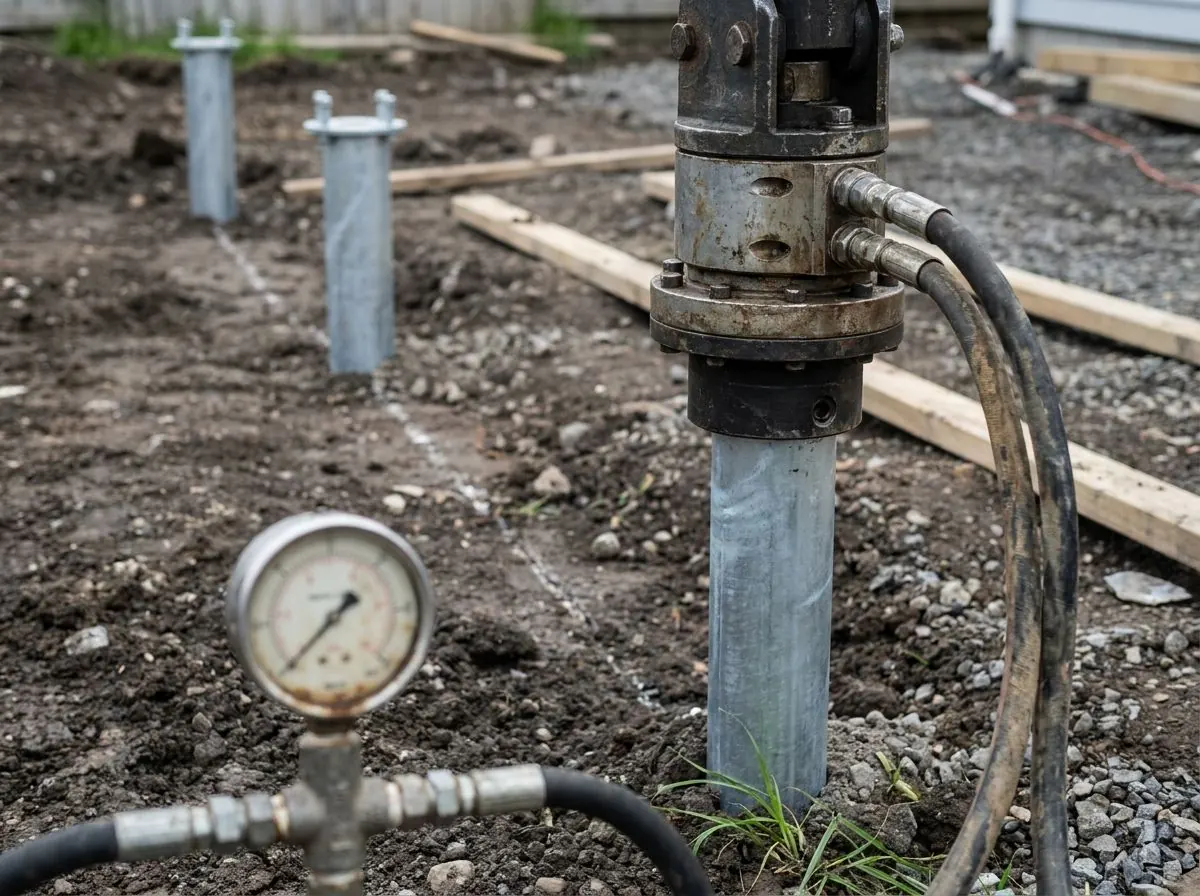
You can’t tell what you’ve got. Here is the true limitation. Machine-installed screw piles log torque on the way down, and torque correlates with bearing capacity, so the job ends with a figure. Turning one by hand produces no figure at all. You know how deep it went. Whether it will hold is guesswork.
Guesswork is acceptable under a shed. Under something bolted to your home, it isn’t.
Should you rent a machine and do it yourself?
Every so often someone asks whether renting a hydraulic drive head is an option. In our view it seldom pays off. The head needs to suit the carrier’s hydraulic flow; rental units frequently lack torque monitoring, which is the entire point of machine installation; and a capacity mistake ends up buried out of sight.
Add up the equipment, the drive head and a lost day, and on a small project the difference from hiring a professional screw pile crew tends to be narrower than people assume.
The permit question
Where a permit applies, the authority could ask for engineered drawings along with documented capacity. A pile turned in by the homeowner, without a torque record, usually has no way of meeting that. Talk to the authority having jurisdiction before the first pile goes in, not afterwards — the City of Calgary and the neighbouring towns and counties don’t all ask for the same things.
Where we actually stand on this
Not every deck needs a contractor, and we won’t claim otherwise. Many don’t, and saying they do wouldn’t be honest.
What we’d like to spare you is discovering one April that frost has pushed up a corner of something fastened to your house. Fixing that runs to several times the cost of a proper foundation at the start, since there’s now a finished structure sitting on top of the problem.
Describe your project and we’ll tell you which side of that line it falls on. Request a quote.
Thinking about screw piles for your project?
Questions after reading this, or ready for a price? Get in touch — we install screw pile foundations in Calgary and the towns around it.