Calgary Clay, Cochrane Till, Canmore Bedrock: How the Ground Shapes a Screw Pile Foundation
Within an hour’s drive of Calgary you pass over four distinct kinds of ground, each with its own foundation headache. A contractor pricing an identical screw pile to an identical depth on all four hasn’t looked closely.
Northeast Calgary: high-plasticity clay
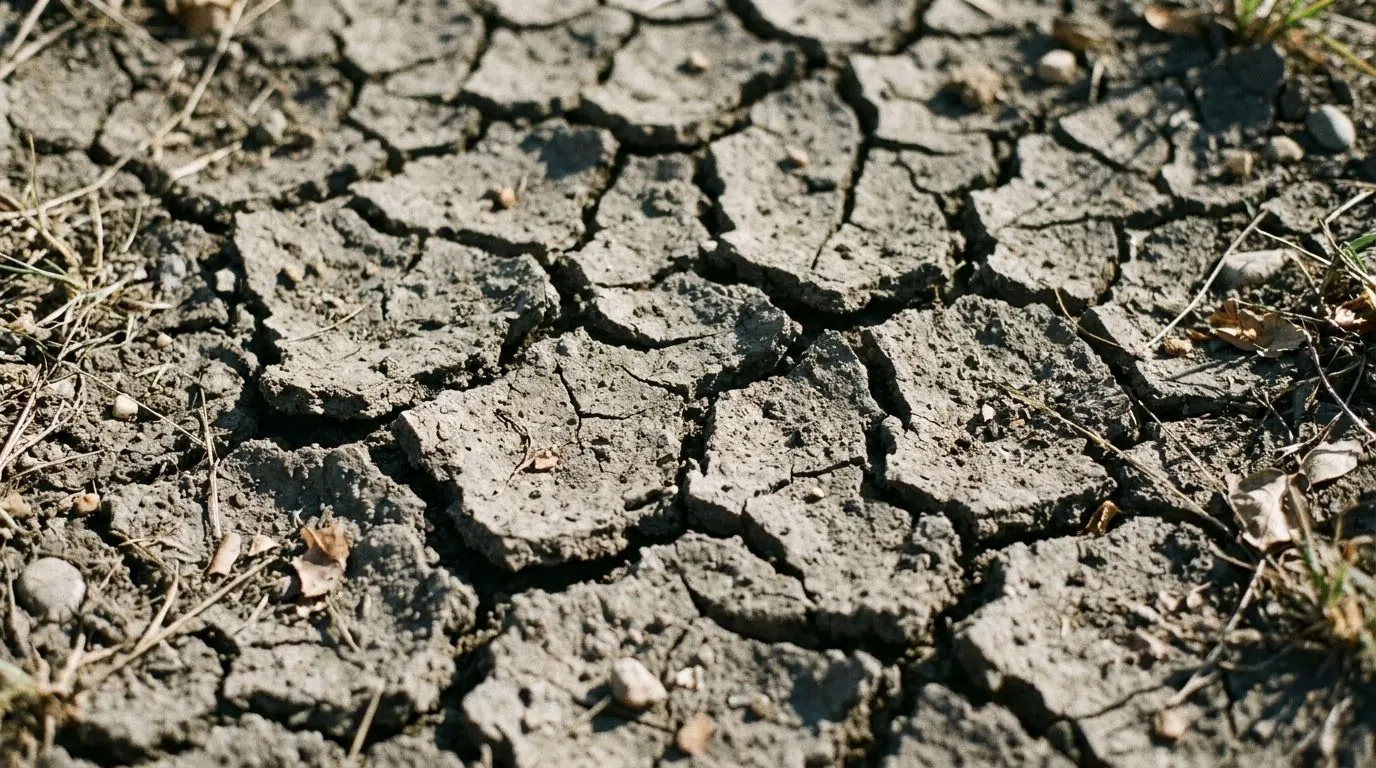
Through the north and east of Calgary, and on toward Airdrie and Chestermere, the soil is mostly glaciolacustrine clay — the type prone to serious shrink-swell.
What drives it is moisture. Give this clay water and it swells; let it dry and it shrinks. Between a soggy spring and a parched August, the upper metre or two — what engineers call the “active zone” — genuinely rises and falls.
Any shallow footing inside that layer rides along with it. The symptoms are familiar: doors that stick in their frames, stepped cracks in block walls, one corner of a deck heaved up while the rest stays put.
Making the footing larger doesn’t solve it. Reaching bearing beneath the active zone does.
The inner city: variable fill
In Calgary’s older neighbourhoods, the lawns sit on decades of fill nobody can trace. Some of it is perfectly sound. Some is broken rubble, ash, buried demolition debris or soft spots — occasionally all on one lot.
The surface tells you nothing about what lies beneath, and that is the reason we confirm capacity with torque rather than stopping at a depth written on a drawing. On an infill lot, two helical piles three metres apart can quite properly end up at very different depths.
River valleys: alluvium with perched water
Beside the Bow and Elbow rivers, and southward through Okotoks and High River, you’re on river-valley alluvium: silts and sands that vary a lot, occasionally holding perched water tables above the regional groundwater.
That perched water makes digging a real struggle. It makes installing screw piles only slightly harder, which is part of why piles tend to be chosen in these areas. Expect the depth to good bearing to change quickly from spot to spot.
Out west to Cochrane: dense till and cobbles
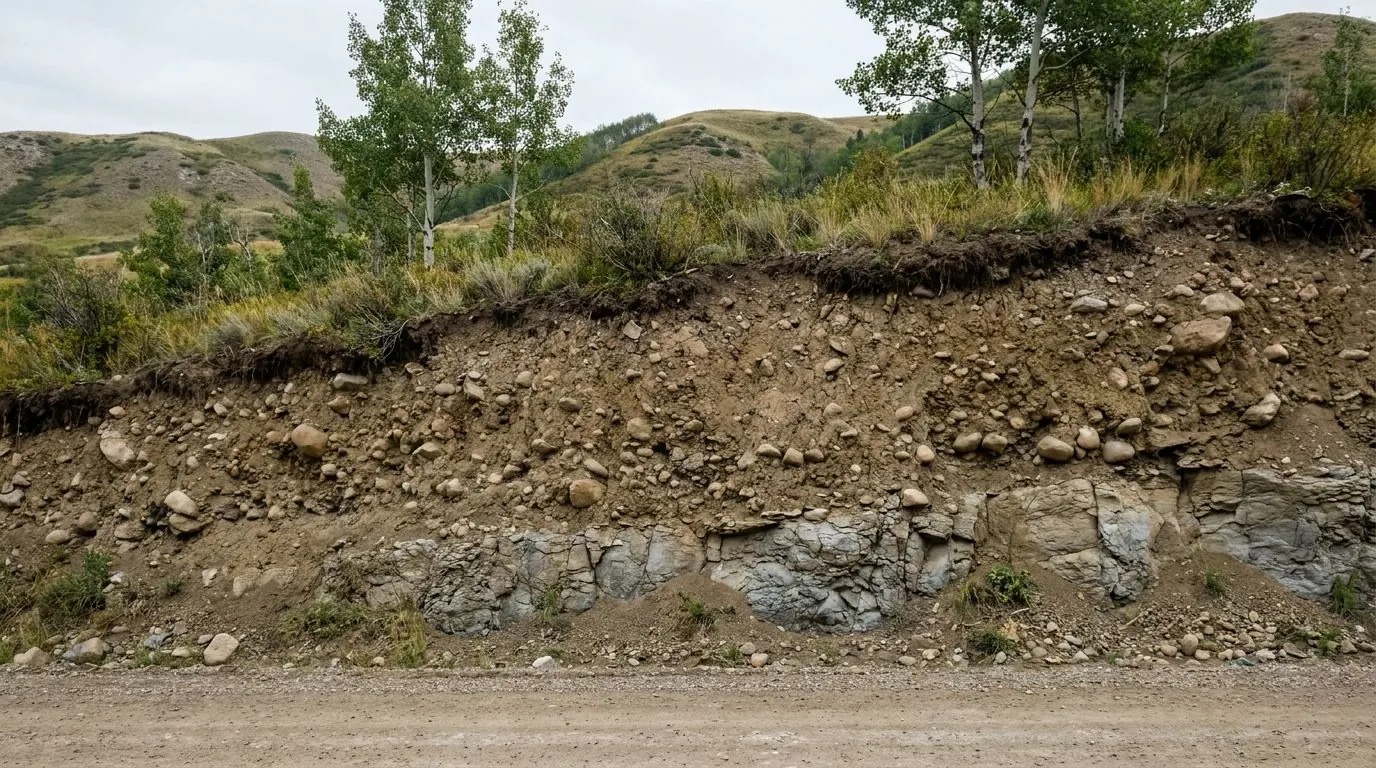
Climbing toward the foothills, the clay is replaced by dense glacial till, then cobbles, and finally bedrock not far below the surface.
Capacity-wise that’s excellent ground; installation-wise it’s hard going. It calls for more torque and heavier shafts, and a pile can realistically hit refusal on a cobble before it reaches design depth. If it does, the straight options are moving the pile, changing the pile size, or changing the foundation type.
A quote for Cochrane at Calgary rates, given without questions about the site, is a quote nobody thought through.
Canmore and the Bow Valley: rock near the surface
Farther west still, sound rock may sit so close to grade that a helical pile has no depth to work with. In those cases a screw pile can be the wrong choice entirely; rock anchors, or a shallow footing seated directly on the rock, may suit better.
Saying so is part of doing this work honestly.
Frost depth is the minimum, not the goal
Everywhere in this region, frost is commonly cited as reaching somewhere around 1.2 to 1.8 metres — local conditions and your engineer set the real figure. Clearing frost is the bare minimum. It isn’t what the design is aiming for.
What the design is aiming for is competent bearing strata, and the depth to that shifts from one area to the next, lot to lot, and sometimes within one site. So:
Specify torque, not depth
While a screw pile is being turned in, torque is recorded the whole way down, and that torque correlates with bearing capacity. Installation continues until the pile hits the torque matching its engineered load, at whatever depth that occurs.
On a single site, two piles may stop at different depths and both be right. One simply met good ground sooner. Each carries its design load, and each has a torque record to show for it.
A spec reading “piles to 3 m” with no capacity attached describes how much steel to bury — not a foundation.
Information for engineers and inspectors
We build to your specification, record torque on every pile, and hand over as-builts. Should the ground differ from what the geotechnical report expected, we’ll raise it with you before continuing, rather than mentioning it in paperwork after the fact.
Learn how we work, or visit our page for engineers and building inspectors.
Thinking about screw piles for your project?
Questions after reading this, or ready for a price? Get in touch — we install screw pile foundations in Calgary and the towns around it.