Screw Piles for Fence and 6×6 Posts
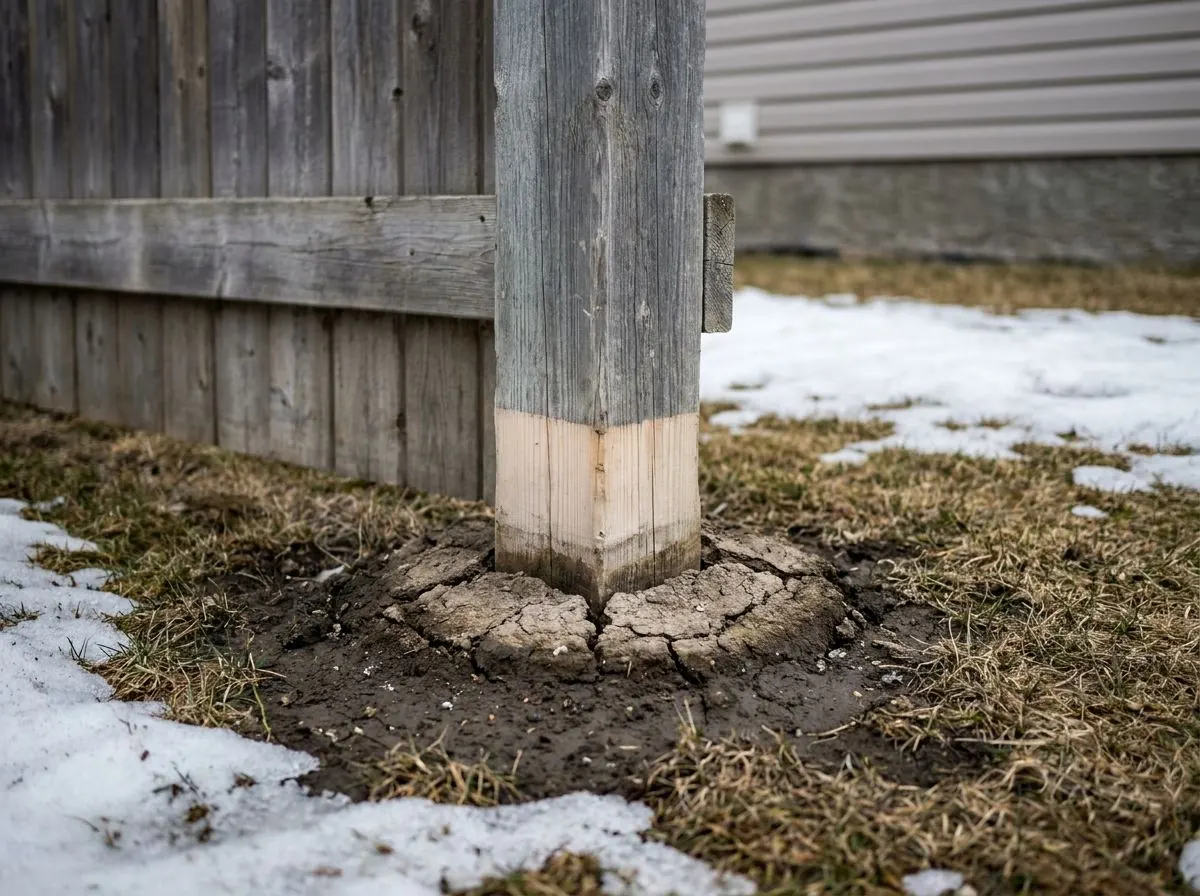
The project is small, but the ground doesn’t care. Sink a fence post in a concrete plug in Calgary clay and you have built a near-perfect frost heave example, one that usually reveals itself about three winters later.
Why posts heave here
A concreted post goes through two separate problems each winter.
First, moisture in the surrounding soil freezes, expands and bonds to the sides of the plug, dragging it upward. That process, adhesion freezing, explains how a post can climb even with its base below frost depth.
Second, the clay moves on its own. Calgary’s high-plasticity soils swell after wet spells and shrink in dry ones, and anything anchored in the upper metre moves with them.
What you end up with: a fence line that wanders up and down, a gate that no longer latches, and pergola posts at mismatched heights.
Pouring concrete doesn’t stop any of that. If anything, the fat plug gives frost a bigger surface to hang onto.
Why a helical pile behaves differently
A helical screw pile pairs a slim shaft with a helix seated well under the active soil layer. Frost has far less area to lock onto, and the helix pushes back against uplift, which is precisely the force heave creates.
For that reason, piles get chosen for structures where holding level matters more than how much weight is involved.
When it is worth it
Worth it:
- Gate posts, since even a few millimetres of shift can defeat the latch
- Pergolas and shade structures whose posts have to stay aligned
- Fence runs over obviously reactive clay, or where an earlier fence already moved
- Any spot built on fill of uncertain quality
- Light standards and sign posts that must remain plumb
Probably not worth it:
- Long stretches of standard backyard fence on decent ground, where per-post cost adds up fast
- Anything temporary
- Structures where a little seasonal shifting truly makes no difference
Screwing piles along 60 metres of fence rarely makes sense, and we won’t claim otherwise. The four posts carrying a gate and a pergola frequently are.
How the post attaches
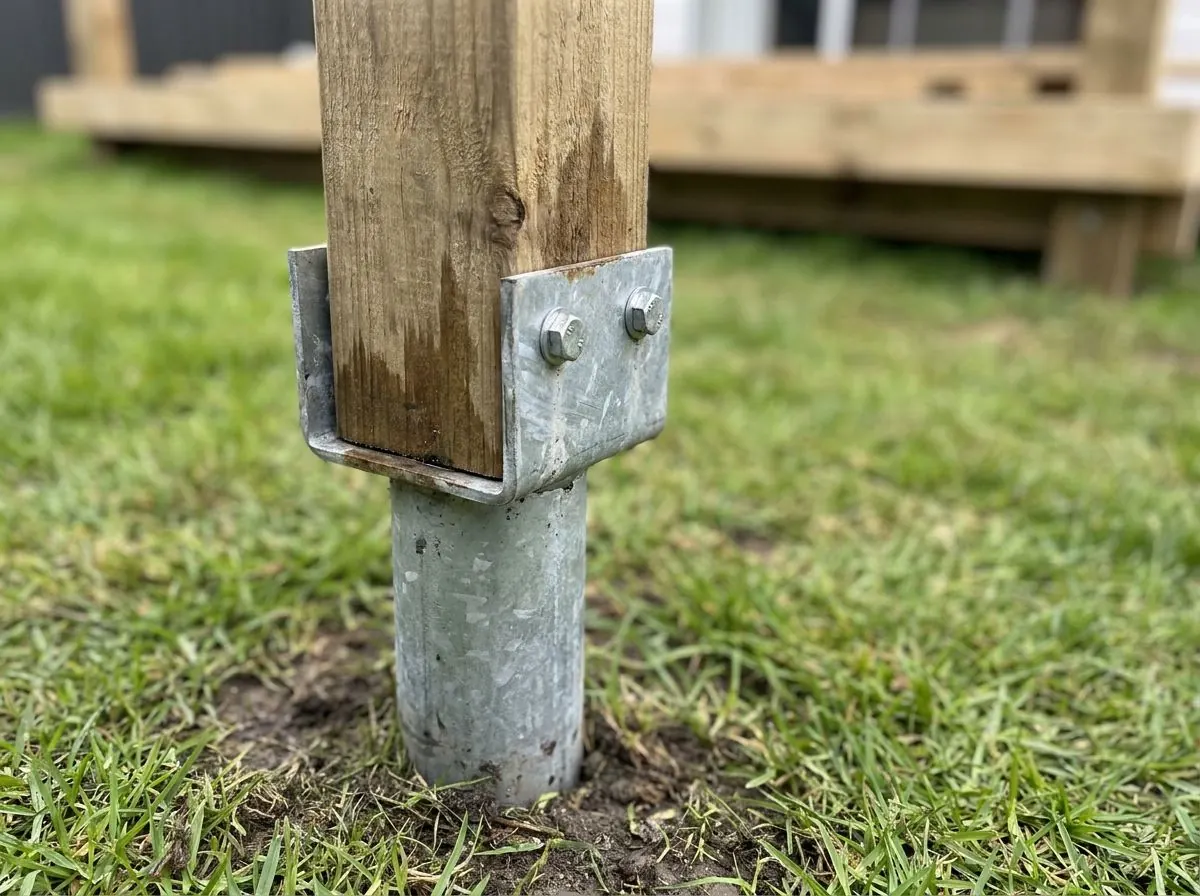
The timber sits in a bracket fixed to the top of the pile. Typical options:
- Fixed head — a saddle or plate that the post bolts into
- Adjustable head — threaded so the height can be tweaked once the pile is in
- Post saddle — a U-shaped bracket matched to the lumber, usually 4×4 or 6×6
For pergolas and gates, where posts need to line up exactly, the adjustable head is money well spent. Setting four heads to one elevation with a laser beats shimming posts after the fact by a wide margin.
6×6 posts specifically
Put a 6×6 in a bracket built for a 6×6. Jamming it into a 4×4 saddle or stuffing the gap with scrap wood isn’t a solution. Mention the post dimension when you request a quote and the matching head will arrive with the pile.
The realistic cost view
Post for post, a screw pile runs more than a bag of concrete mix. The thing you’re paying for is a gate that still closes properly five years on.
For a gate or pergola, that trade is usually easy to justify. Across a hundred metres of fence it typically isn’t, and we’ll tell you as much.
Ask us about a small job — we take them on, and if concrete makes more sense for yours, we’ll say so.
Thinking about screw piles for your project?
Questions after reading this, or ready for a price? Get in touch — we install screw pile foundations in Calgary and the towns around it.