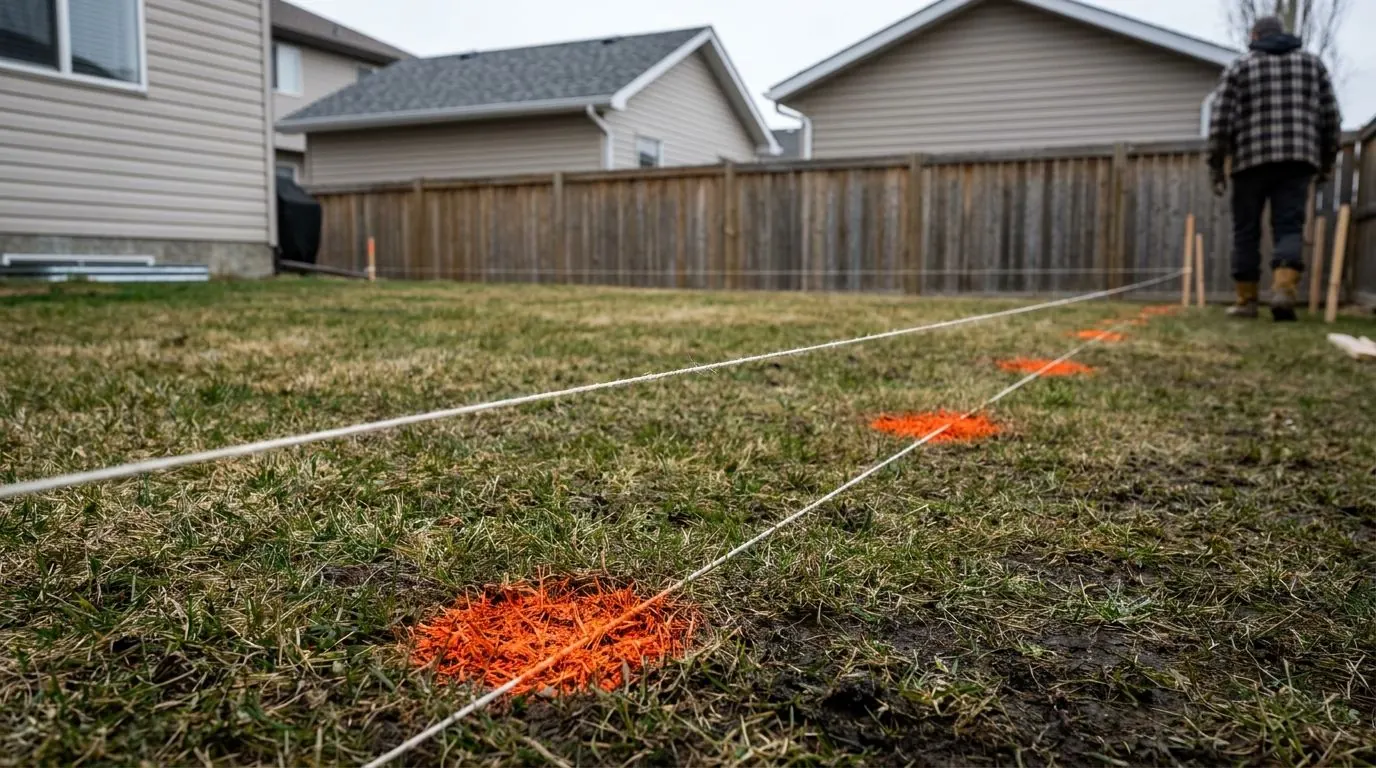
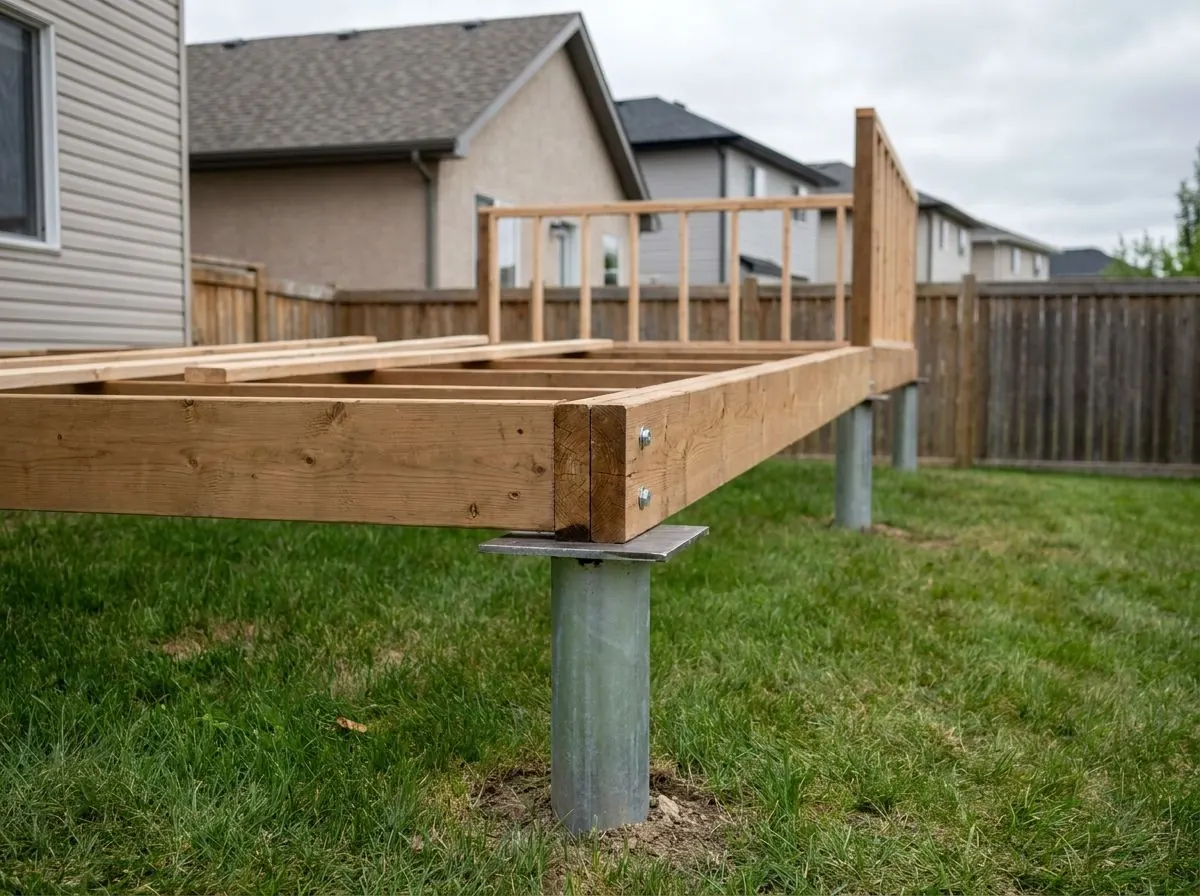
How Many Screw Piles Does a Deck Need?
Strictly speaking, the number of screw piles under a deck is an output of the framing design: how the beams and joists are laid out. Square footage alone doesn’t decide it. Still, anyone planning a build needs a ballpark, so below are realistic ranges, then the variables that shift them.
Typical counts
| Deck size | Typical piles |
|---|---|
| 8 × 8 | 3–4 |
| 10 × 10 | 4–6 |
| 12 × 16 | 6–8 |
| 16 × 20 | 8–12 |
| Wrap-around or multi-level | 12+ |
Use the table to plan, never to specify. Depending on the factors covered next, a 16 × 20 deck might properly sit on eight piles, or it might need fourteen.
What actually determines the number
Beam span. Nothing moves the count more. Joists rest on beams, and beams rest on piles, so a stiffer beam lets the piles spread out. With a deep built-up beam you might space supports ten feet apart; a lighter beam could hold you to six. A layout with a few heavy-duty piles and one with many lighter ones can each be sound. They are simply two different designs.
Load. That covers live load, dead load and whatever unusual weight ends up on the boards. Hot tubs are the textbook case. Full of water and bathers, a tub puts a lot of weight on a small footprint, so it typically gets dedicated piles no matter how the rest of the frame is supported.
Soil capacity. Identical piles carry more in dense till than in soft clay. That is exactly why capacity gets confirmed with torque as each helical pile goes in, instead of being lifted from a chart.
Common things that change the count
- Attached vs freestanding. Ledgering to the house changes how load travels; a freestanding deck generally needs one more row of support.
- Stairs. Stair stringers and landings often want piles of their own, and they are the item most people leave out of a rough estimate.
- Cantilever. Letting joists run past the beam allows the pile line to move in from the outer edge, and done properly that can trim the count.
- Hot tubs, outdoor kitchens, planters. Heavy point loads each need specific design attention.
Do bigger piles mean fewer piles?
Frequently. A wider shaft carrying extra helices supports more weight, which lets you stretch the spacing. Whether it saves money is a separate question: a handful of costlier piles against a larger number of cheaper ones works out differently from one job to the next.
Rather than assume, ask. Where both options genuinely make sense, we’ll quote each so you can compare.
What we need to give you a real number
Pass along whatever details you have:
- Deck footprint and approximate height off the ground
- Whether it attaches to the house or stands alone
- Any heavy features planned for it
- Beam and joist sizing, if a plan exists
- The property address, so we can judge the ground conditions
With that, we can usually get back to you with a pile count and a price within 48 hours. A drawing helps more than a written description, even if it’s a rough pencil sketch.
One thing worth knowing before you call anyone
When a contractor names a pile count without asking about spans, loads or where the house is, that number is a guess. Plenty of decks are straightforward, so it may turn out fine, but be clear that a guess is what you’re paying for.
Send us your dimensions for a pile count and a firm price, or see what screw piles cost in Calgary.
Thinking about screw piles for your project?
Questions after reading this, or ready for a price? Get in touch — we install screw pile foundations in Calgary and the towns around it.